There is a mountain in Da Nang from which you can see the entire city, with clear-water coves at its foot and, in the forest between, a primate so striking that people call it the queen of the langurs. It is twenty minutes from your beachfront hotel.
Son Tra is the most underrated place in Da Nang. Most visitors stop at Linh Ung Pagoda, take a few photographs and drive back — while the peninsula easily fills a morning, or a whole day if you like being outdoors.
This guide covers what is worth stopping for, which roads to take and which to avoid, and the safety points first-timers most often miss.
Where is Son Tra?
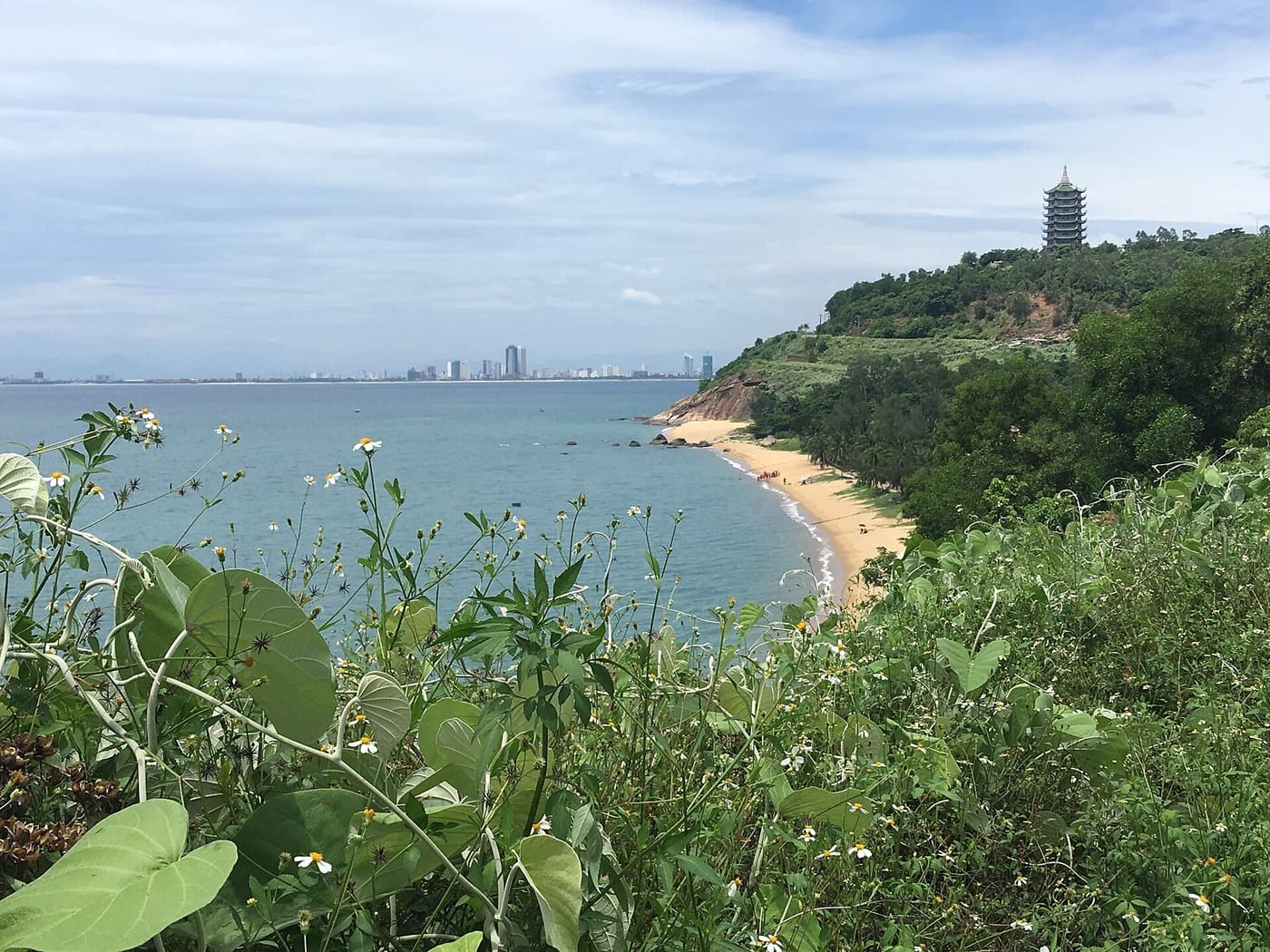
Son Tra lies north-east of the city, about 10 km from the centre and only 15–20 minutes from My Khe beach. The peninsula covers roughly 4,400 hectares, rises to almost 700m, and is nearly all protected natural forest.
| From | To Linh Ung Pagoda | To Ban Co Peak |
|---|---|---|
| My Khe beach | 15 min | 35 min |
| City centre (Hai Chau) | 20 min | 40 min |
| Da Nang airport | 25 min | 45 min |
Why it is worth your morning
Real forest beside a city
Very few coastal cities keep intact natural forest inside their own boundaries. A few minutes up the road and you are under a closed canopy, hearing cicadas instead of horns.
Red-shanked douc langurs
Son Tra is one of the few places on earth to see red-shanked doucs in the wild. Their coats combine grey, chestnut, white and orange in a way that looks painted on. They are most active 6–8.30am and again from about 4pm.
Clear-water coves
Bai But, Bai Rang, Ghenh Bang and Mui Nghe all have clearer water than the city beaches, sheltered by rocky headlands.
The coast road
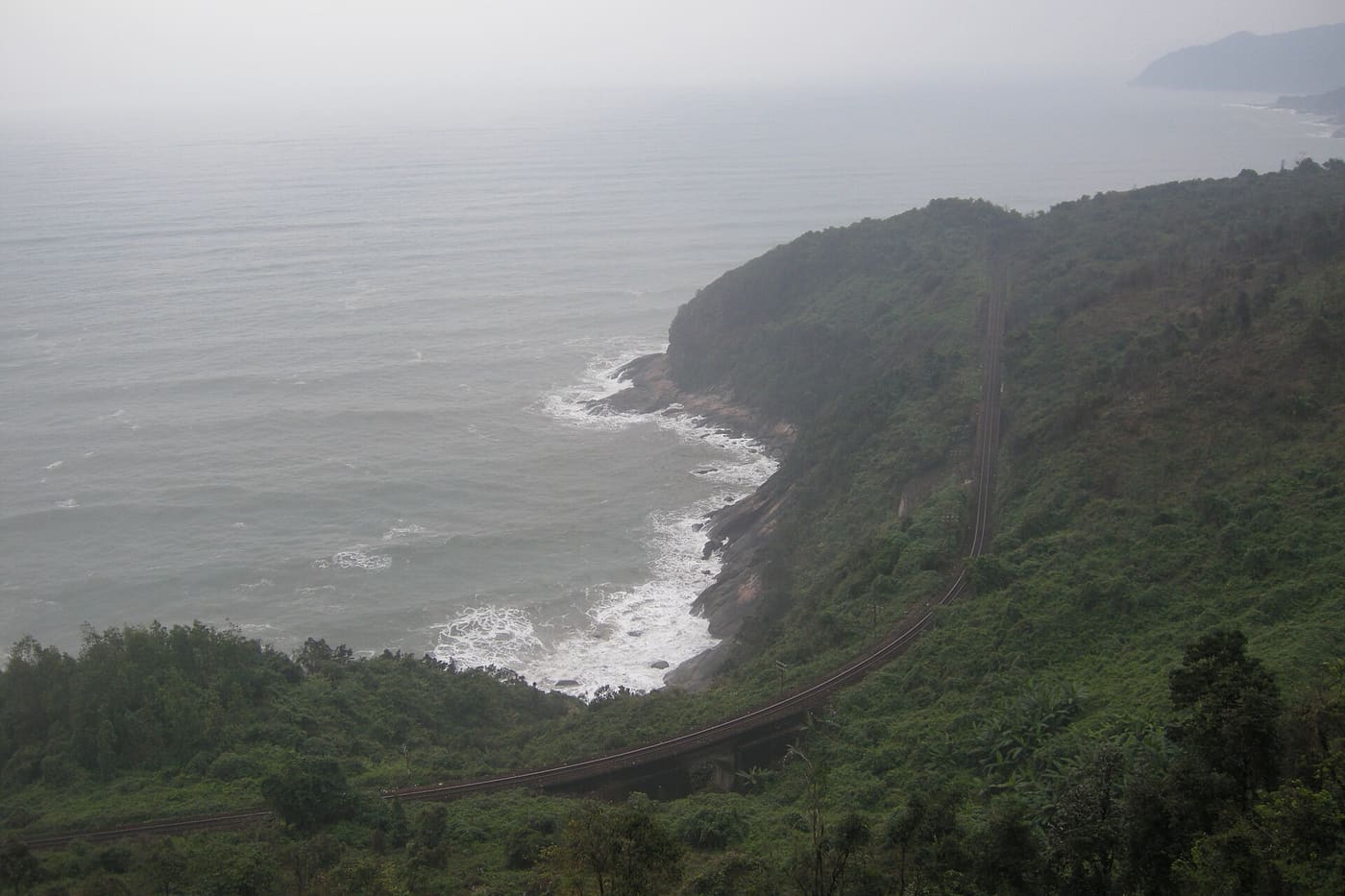
The loop road follows the mountainside, forest on one side and sea on the other, opening a new view at every bend.
The best view of Da Nang
From Ban Co Peak or the Vong Canh viewpoint you see the whole city, the Han River with its bridges, and the coastline curving south towards Hoi An.
When to go
| Months | Conditions | Verdict |
|---|---|---|
| Mar – May | Dry, mild, clear | Best — for driving and for langur spotting |
| Jun – Aug | Fierce midday sun, lovely sea | Good early morning or late afternoon |
| Sep – Nov | Rain, slippery roads, occasional landslips | Check conditions before going up |
| Dec – Feb | Cooler, cloudy | Quiet and pleasant, less light for photos |
Sunrise or sunset?
Both, but in different places. Sunrise is best on the eastern side — Mui Nghe, Bai Rang — where the sun comes out of the sea. For sunset, stand at Ban Co Peak or the pagoda and look back at the city as its lights come on.
What to stop for
Linh Ung Pagoda, Bai But
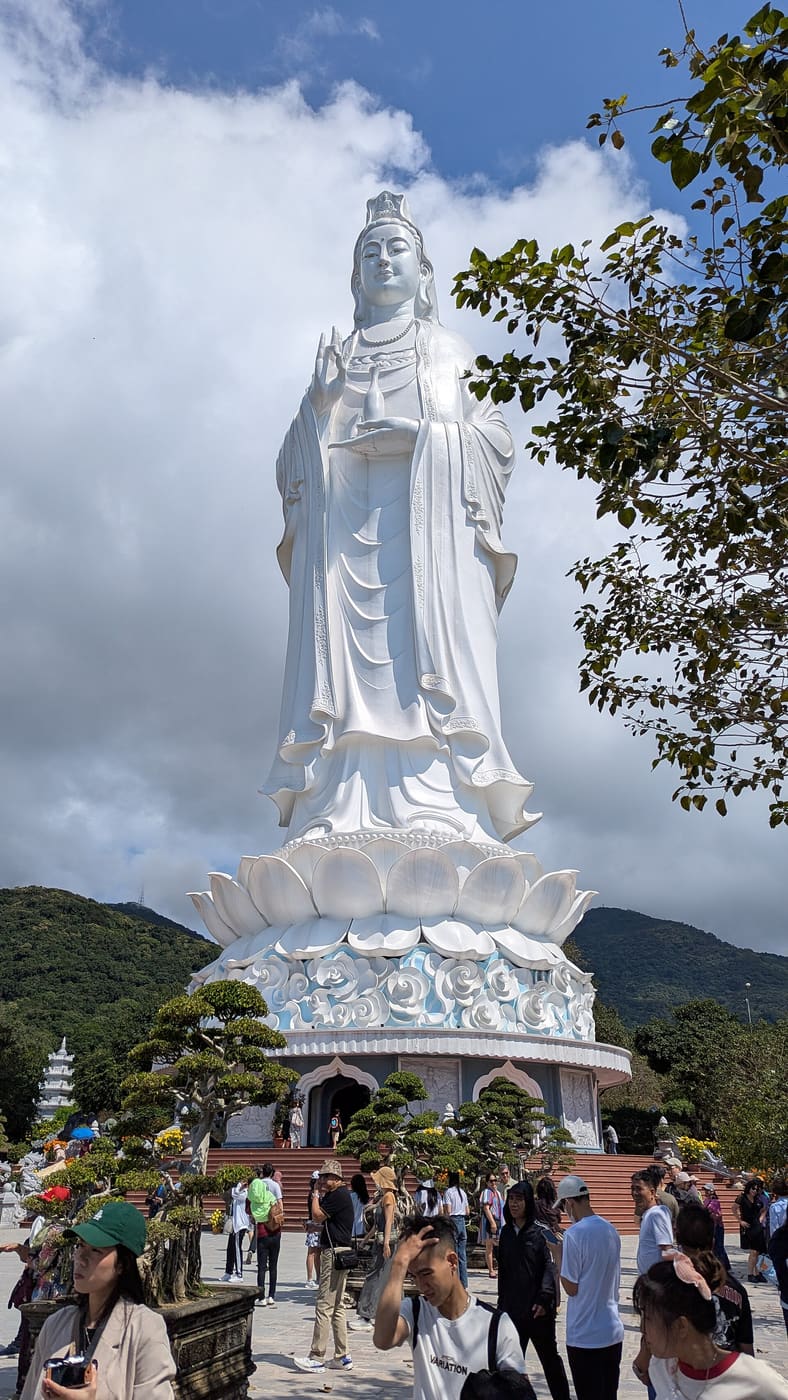
Da Nang's best-known temple, with a 67m Lady Buddha statue facing the sea — visible from My Khe beach. Wide grounds, plenty of shade and a fine view over the bay. Free entry. Cover shoulders and knees.
Ban Co Peak
The highest point cars can reach, with a statue of a god seated at a chessboard. This is the finest panorama on the peninsula. The road up is steep with tight bends — the main reason we advise inexperienced riders against motorbikes here.
The thousand-year banyan
An enormous old banyan with a curtain of aerial roots, reached by a short walking path.
Ghenh Bang
Rocks and clear water on the north-west side, popular with local campers. Requires a walk down a steep path.
Bai But and Bai Rang
Two sheltered coves. Bai Rang has small restaurants and is a good choice for a quieter swim than My Khe.
Tien Sa lighthouse, Mui Nghe, the radar domes
Further viewpoints along the loop. Access to some areas changes, and parts of the summit are military — only stop where signs allow it.
Seeing the langurs responsibly
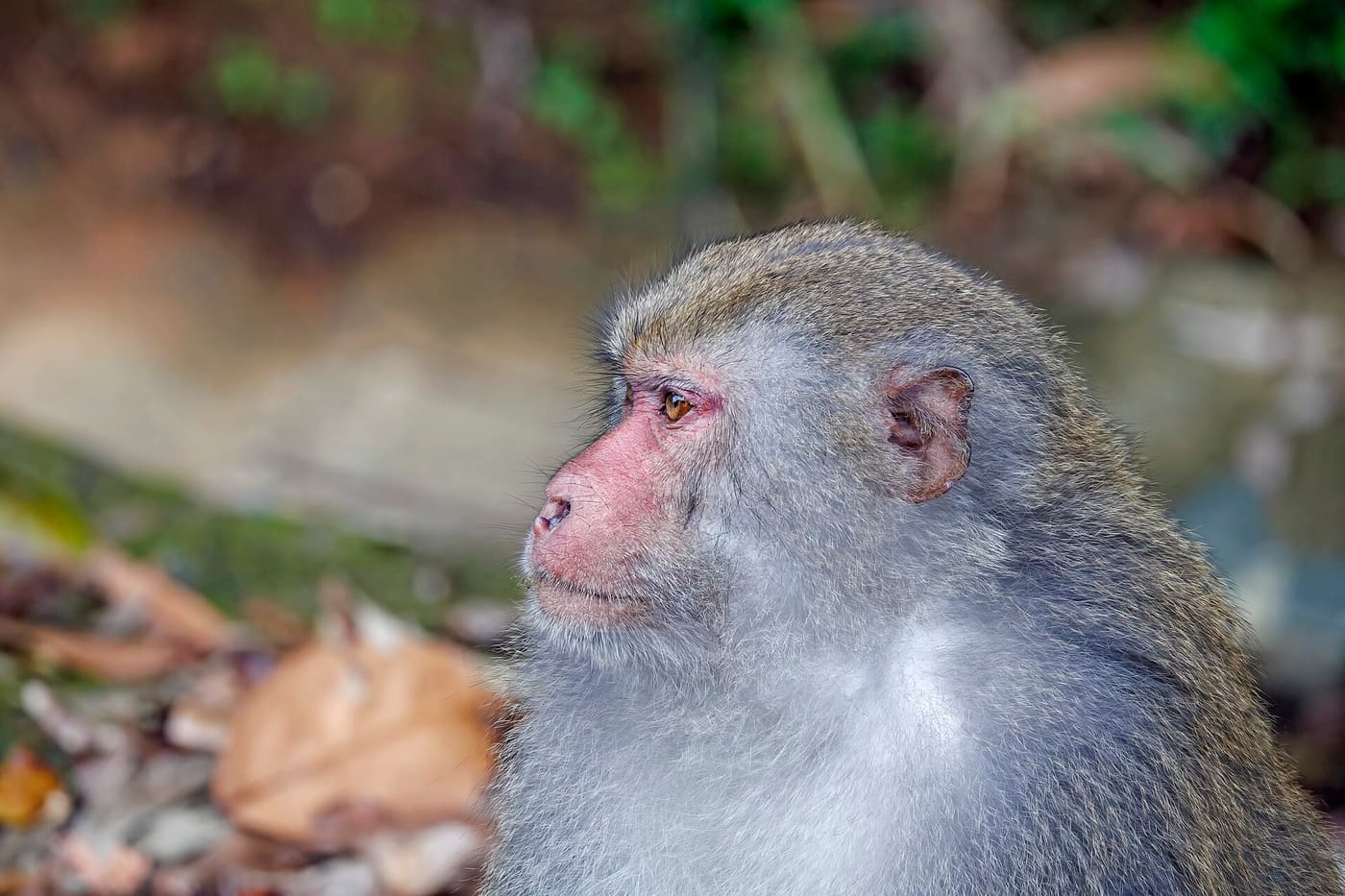
- Best time: 6–8.30am, when they come out to feed on young leaves.
- Best place: the forest road above Linh Ung Pagoda, where the canopy meets over the road.
- Keep your distance. Stop, switch off the engine, watch from where you are. No flash.
- Never feed them. Human food disrupts their foraging and draws them to the roadside, where they get hit by vehicles.
- Use a zoom. Do not creep closer to get a phone photograph.
Suggested plans
Half a day (the usual choice)
| Time | What you do |
|---|---|
| 6.00 | Leave the hotel; drive the forest road looking for langurs |
| 7.00 | Ban Co Peak — the city in early light |
| 8.15 | The thousand-year banyan |
| 9.15 | Linh Ung Pagoda and Bai But |
| 10.45 | Coffee with a sea view on the way down |
| 11.30 | Back in the city for lunch |
A full day
Add an afternoon swim at Bai Rang, or the walk down to Ghenh Bang, and finish with sunset at Ban Co Peak.
Combining with other places
- Son Tra in the morning, Marble Mountains in the afternoon — balanced, little driving.
- Son Tra in the morning, Hoi An from late afternoon — the most popular pairing.
- Son Tra plus a swim at My Khe — the easiest day of your trip.
Getting around the peninsula
| Option | Strengths | Limits |
|---|---|---|
| Motorbike | Stop anywhere, cheap | Steep gradients and blind bends; a small or underpowered scooter is genuinely unsafe here |
| Self-drive car | Safer, air conditioned | A few narrow sections |
| Private car with driver | The driver knows where the langurs appear and where to stop | More expensive for a solo traveller |
| Grab / taxi | Fine for the run up to the pagoda | Very hard to find a ride back from the higher viewpoints |
One safety note worth taking seriously: the climb to Ban Co Peak is continuously steep with blind corners. There are accidents here every year, most of them tourists two-up on a scooter braking on the front wheel on the way down. If you are not genuinely confident, take a car.
Food and costs
There are only a handful of small places and view cafés on the peninsula, so most people eat before going up and again after coming down.
| Item | Cost |
|---|---|
| Entrance and parking | Free, including the pagoda |
| Motorbike hire, full day | 120,000 – 180,000₫ |
| Coffee with a sea view | 50,000 – 90,000₫ |
| Seafood at Bai Rang | 200,000 – 400,000₫ per person |
Son Tra is one of the cheapest days out in Da Nang — essentially you pay only for transport.
Practical points
- Fill up before you go. There is no petrol station on the peninsula.
- Do not drive it after dark. No street lighting, blind bends, and mist forms quickly.
- Cover shoulders and knees at the pagoda.
- Carry water and a hat. Every stop is outdoors.
- No litter, no loud music. This is protected forest, and noise drives the langurs away.
- Check conditions in the wet season; some routes close after heavy rain.
- Respect military signage near the summit.
Frequently asked questions
Is there an entrance fee?
No. Both the peninsula and Linh Ung Pagoda are free.
How long should I allow?
Half a day for the main stops; a full day if you want a swim or a forest walk as well.
What time should I go?
6–7am. Cool, beautifully lit, and the best chance of seeing langurs.
Am I guaranteed to see the langurs?
No — they are wild animals. But going early and driving slowly on the forest road above the pagoda gives you a good chance.
Is it suitable for children?
Yes, by car and sticking to the pagoda, Ban Co Peak and the banyan. The coves that require scrambling are not.
Is riding a motorbike up safe?
Only if you ride well, ideally solo or on a stronger bike, in dry weather. Otherwise take a car — the climb to Ban Co is genuinely steep.
Can I swim on the peninsula?
Yes, at Bai Rang and Bai But. The water is clearer than in the city, but there are fewer lifeguards — do not swim far out.
Can I go up at night for the city view?
Not advisable. There is no lighting, the bends are blind and mist descends fast.
Are there toilets?
At Linh Ung Pagoda and some cafés. Not elsewhere.
Is it worth going in the rainy season?
On dry days, yes. Avoid going straight after heavy rain because of slippery roads and localised landslips.
Can I combine Son Tra and Hoi An in one day?
Yes, and it works well: Son Tra in the morning, a rest, then Hoi An from the afternoon into the evening.
Are there organised tours?
Yes, though many visitors prefer a half-day private car because it lets them linger wherever they like.
In short
Son Tra offers three things the rest of Da Nang cannot: real forest, wild langurs, and a full view of the city — twenty minutes from your hotel and almost free.
The formula is simple: go very early, drive slowly, stop often, and do not stop only at the pagoda.
Da Nang Rider runs half-day and full-day private cars over Son Tra with drivers who know the road and where the langurs tend to appear, plus airport transfers and trips to Ba Na, Hoi An, My Son and Hue. See the price list · Message us.
Read next: Linh Ung Pagoda · Da Nang travel guide · The best photo spots in Da Nang