Da Nang is one of the few cities in Vietnam where you can swim in the morning, stand on a mountain in the afternoon, and eat dinner in a 400-year-old trading port half an hour away. The international airport sits inside the city, the roads are wide and easy, and Hoi An, Hue and My Son are all within a half-day's reach.
This guide covers everything a first-time visitor needs: when to come, where to stay, how to get around, what to eat, what it costs, and the mistakes we watch travellers make most often. We drive the Da Nang – Hoi An – Ba Na – Hue routes every day, so most of what follows comes from real trips rather than from a brochure.
Why Da Nang for a first trip to Vietnam?
- Three kinds of landscape in one base. My Khe beach, the Son Tra rainforest and the Hoi An old town all fit inside a three-day trip.
- The airport is downtown. Fifteen to twenty minutes from the terminal to a beachfront hotel — no hour-long transfer.
- Easy with children and older travellers. Flat roads, wide pavements, plenty of pharmacies and hospitals.
- Good value. The same budget buys a bigger, closer-to-the-beach room than in Hanoi or Ho Chi Minh City.
- Calm and clean. Far less hassle and overcharging than most Vietnamese tourist hubs — though you should still ask the price before ordering seafood.
When is the best time to visit?
Da Nang has two seasons, and choosing the right one decides most of what your trip feels like.
Dry season: February to August
The best window for the beach. Clear skies, calm sea, and the Ba Na cable car almost never closes for wind. The trade-off is June to August: it is Vietnam's domestic holiday peak, hotel prices climb, Ba Na and Hoi An get crowded, and midday heat is genuinely fierce at 35–38°C.
Wet season: September to January
Rain here usually arrives in bursts of a few hours and then stops — it is not the all-day drizzle of northern Vietnam. October and November are the wettest months and the typhoon season. In exchange, room rates drop sharply, the sights are quiet, and Hoi An in the rain has a beauty of its own.
| Period | Weather | Good for |
|---|---|---|
| February – April | Mild, dry, 24–30°C | The best all-round choice: comfortable and not yet crowded |
| May – August | Hot and sunny, best sea, 30–38°C | Swimming and family holidays — book early |
| September – November | Rain and typhoons, 23–30°C | Low prices and empty streets in Hoi An |
| December – January | Cool, scattered rain, 20–26°C | Culture, food and sightseeing — not swimming |
Three dates worth knowing: the International Fireworks Festival (usually June into early July, when weekend room rates double), 30 April – 1 May, and Lunar New Year. Avoid all three and your trip is both cheaper and calmer.
Getting to Da Nang
By air — fastest and usually cheapest
Da Nang International (DAD) has direct flights from Hanoi, Ho Chi Minh City and several other Vietnamese cities, plus Seoul, Taipei, Bangkok, Singapore and more. Hanoi or Saigon to Da Nang takes about 1 hour 20 minutes.
By train — slow but beautiful
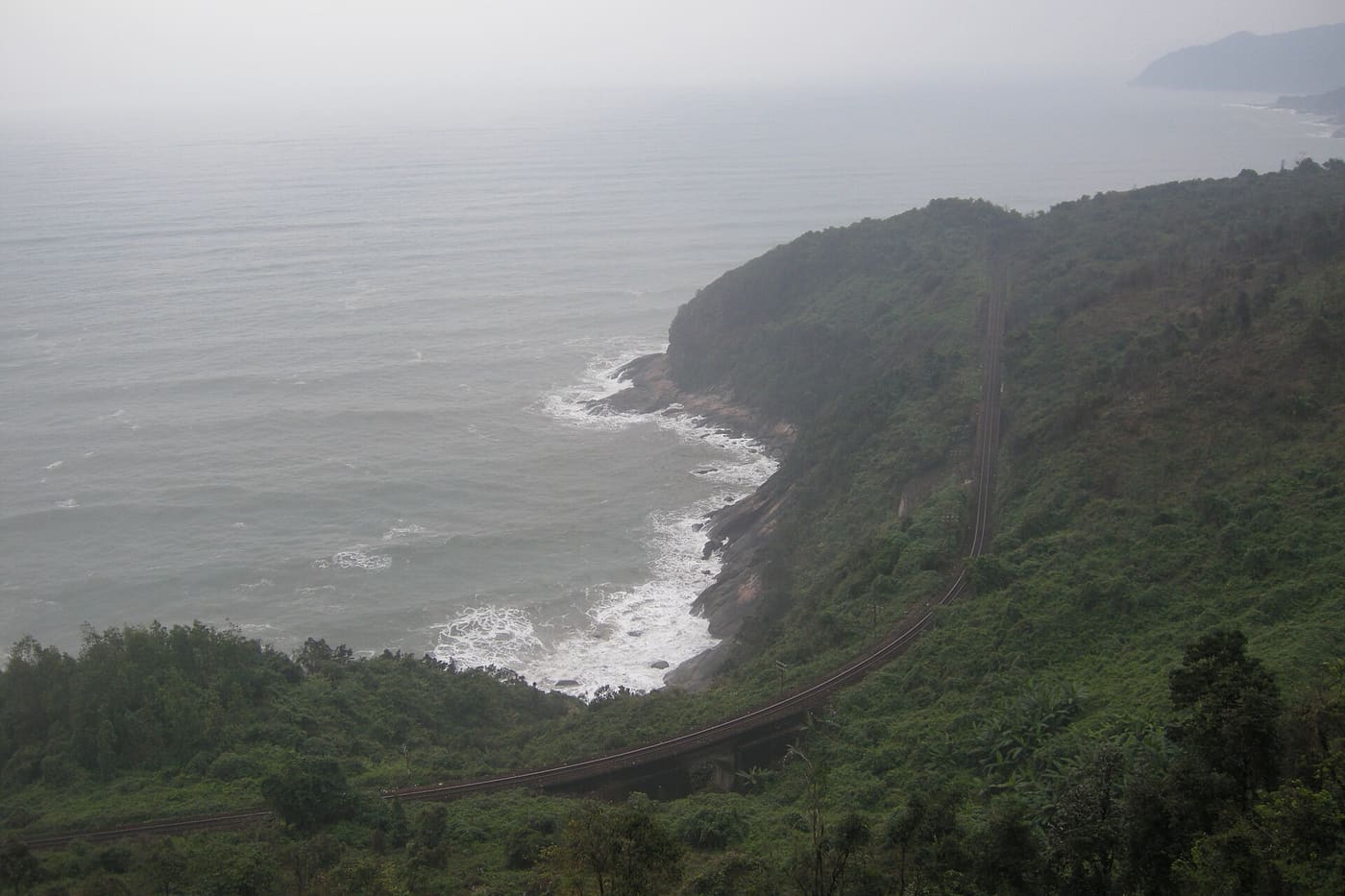
The station is inside the city. The Hue – Da Nang leg (2.5–3 hours) hugs the Hai Van Pass and is regularly named one of the world's great rail journeys. If Hue is on your list, consider taking the train one way and driving back through the tunnel.
By sleeper bus
Cheapest but slow: 15–17 hours from Hanoi, 18–20 from Ho Chi Minh City.
Getting around the city
Nothing is far: ten minutes from My Khe beach to the centre, twenty to Son Tra, forty-five to Hoi An, forty-five up to Ba Na.
| Option | Strengths | Limits |
|---|---|---|
| Grab / taxi | Fine for short hops in town, no booking needed | Very hard to find a ride back from Ba Na, Son Tra or Hai Van |
| Rented motorbike | Cheap (120,000–180,000₫ a day), total freedom | Needs a valid licence; poor choice in rain, with children, or on mountain passes |
| Private car with driver | Set your own timing, air conditioning, driver knows the roads | Costs more if you travel alone |
| Group tour | Cheapest for one or two people | Fixed schedule, shopping stops |
In practice: Grab is enough inside the city. For anything outside it — Ba Na, Hoi An, My Son, Hue, Hai Van — a private car makes more sense from three people up, because you never wait for a ride home and you can stop for photos on the way.
Where to stay
Picking the right neighbourhood matters more than picking the right hotel.
My Khe – My An beachfront
Where most visitors stay. Walk to the sand, plenty of restaurants and cafés, lots of resorts. Slightly removed from the bridges and night market, but that is a ten-minute ride.
Hai Chau — the city centre
Close to Han Market, the Dragon Bridge and cheap local restaurants. Better if you want city life rather than resort life.
Son Tra and Non Nuoc
Quiet, scenic, good for a pure resort stay or a honeymoon — but you will travel for every meal and every sight.
One easily missed detail: if your hotel is on the far side of the Han River from the airport, add five to ten minutes to every afternoon journey.
The sights you should not miss
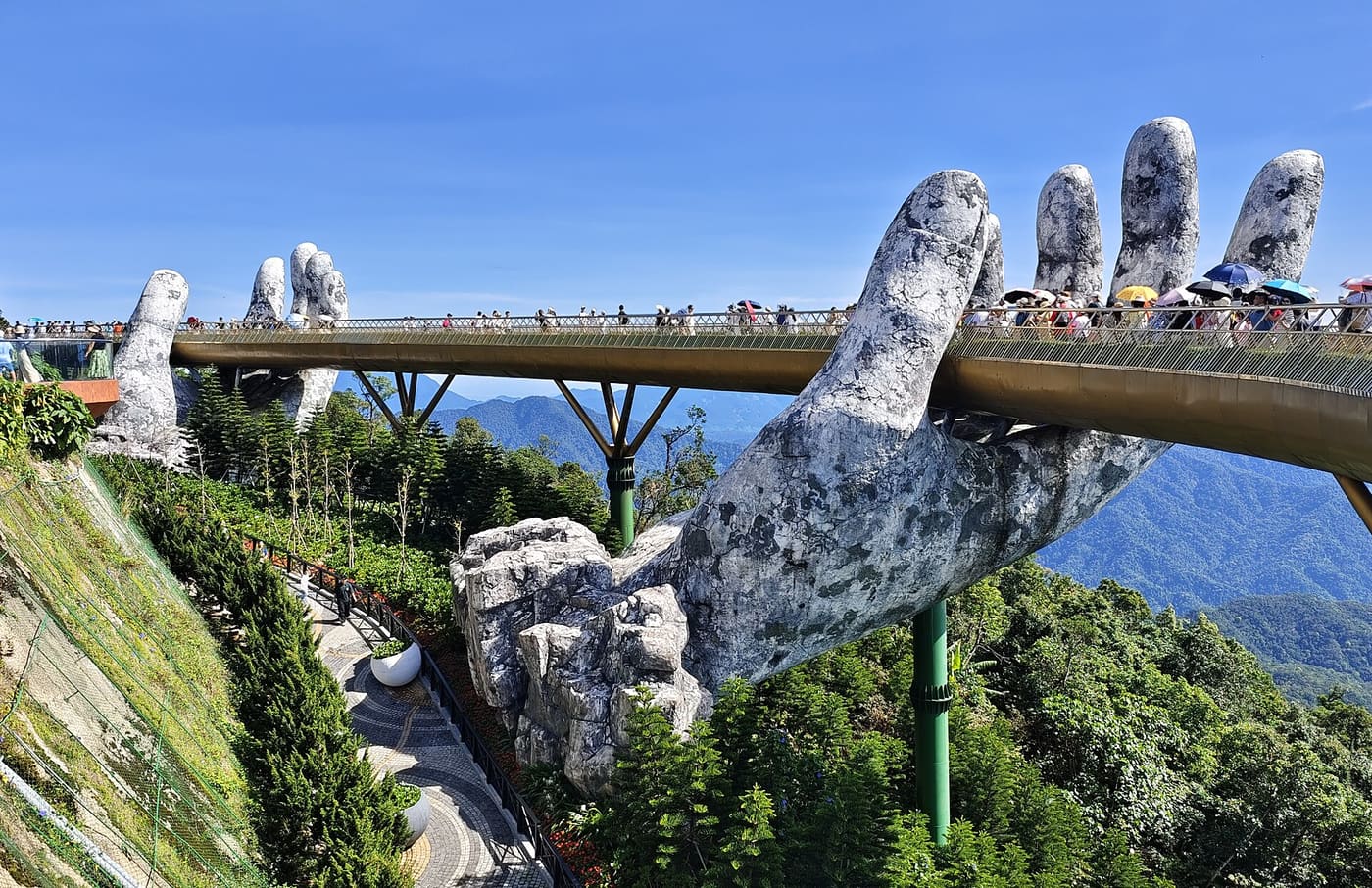
Ba Na Hills and the Golden Bridge
A hilltop resort at nearly 1,500m, cool all year, with the Golden Bridge held aloft by two giant stone hands — the image that put Da Nang on the international map. Allow a full day and take the earliest cable car. See our full Ba Na Hills guide.
Son Tra Peninsula and Linh Ung Pagoda
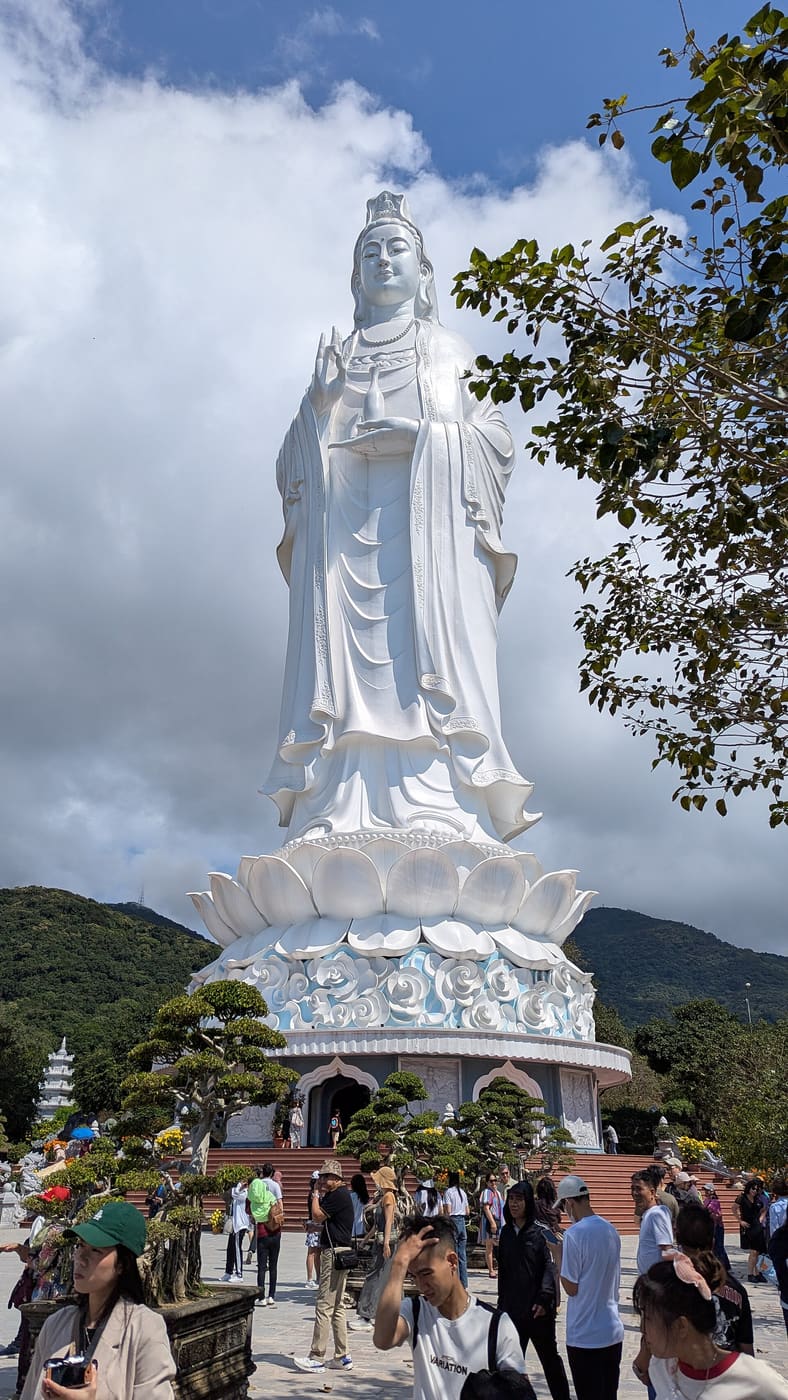
Twenty minutes from the centre: a 67m Lady Buddha statue facing the sea, a beautiful coastal road, and a real chance of seeing red-shanked douc langurs in the wild. See Son Tra Peninsula.
The Marble Mountains
Five limestone hills with caves and centuries-old pagodas. The shaft of light falling through the roof of Huyen Khong cave is the photograph everyone comes for. There is a lift if you would rather not climb.
My Khe Beach
Long, soft sand and moderate surf. At its best between 5.30 and 7am, when locals swim before work.
The Han River bridges
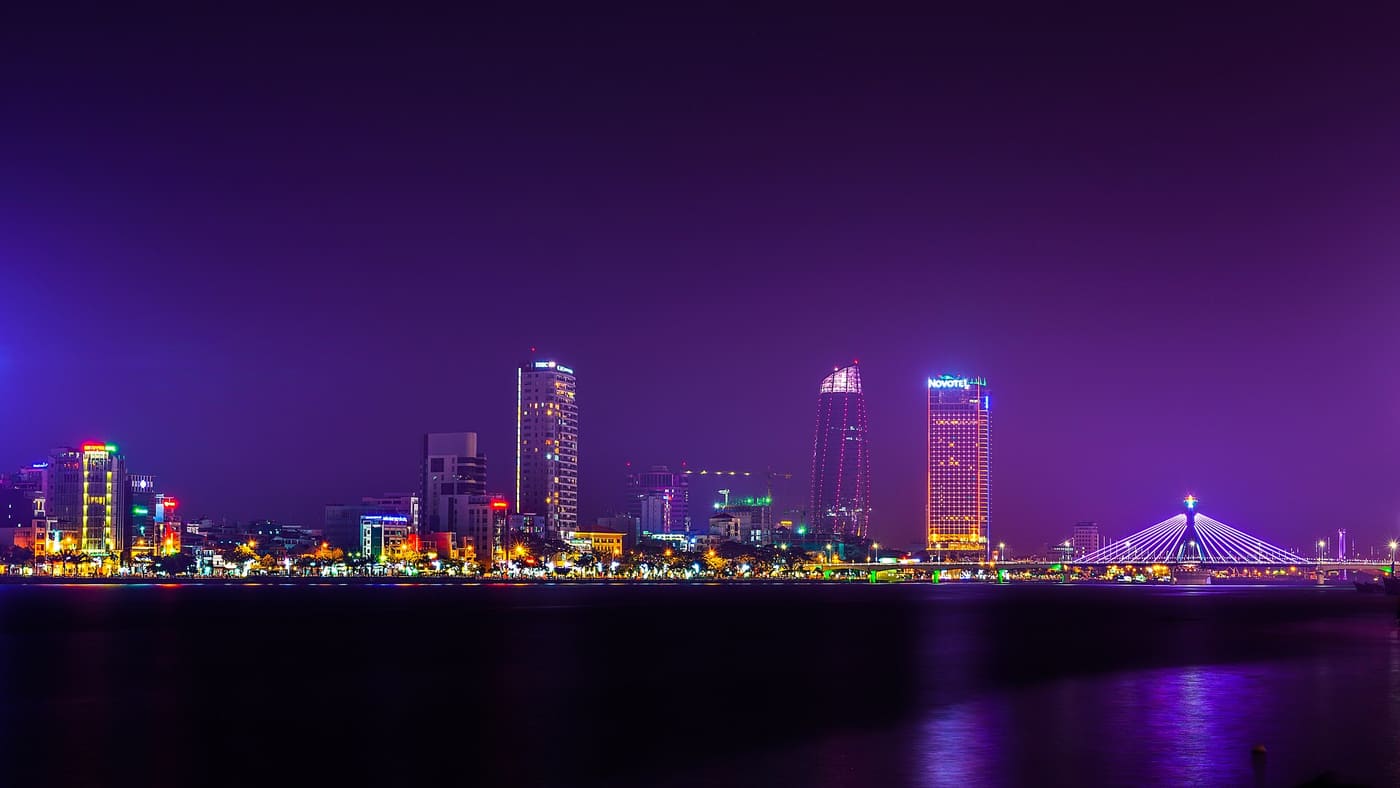
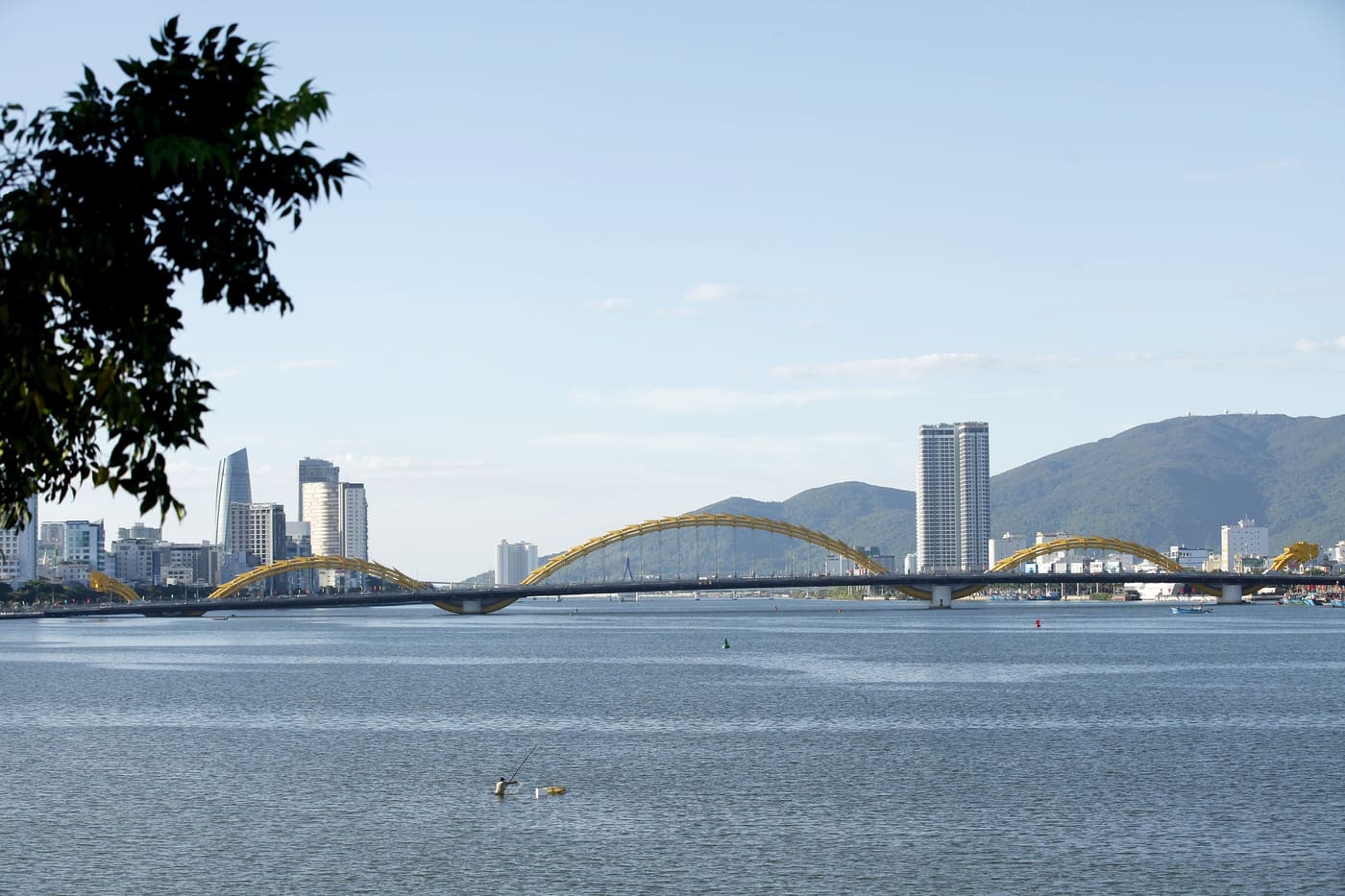
The Dragon Bridge breathes fire at 9pm on Saturdays and Sundays. The Han River Bridge swivels open around midnight at weekends. The Love Bridge and the Carp-Dragon statue are a short walk away.
Hoi An, My Son and Hue
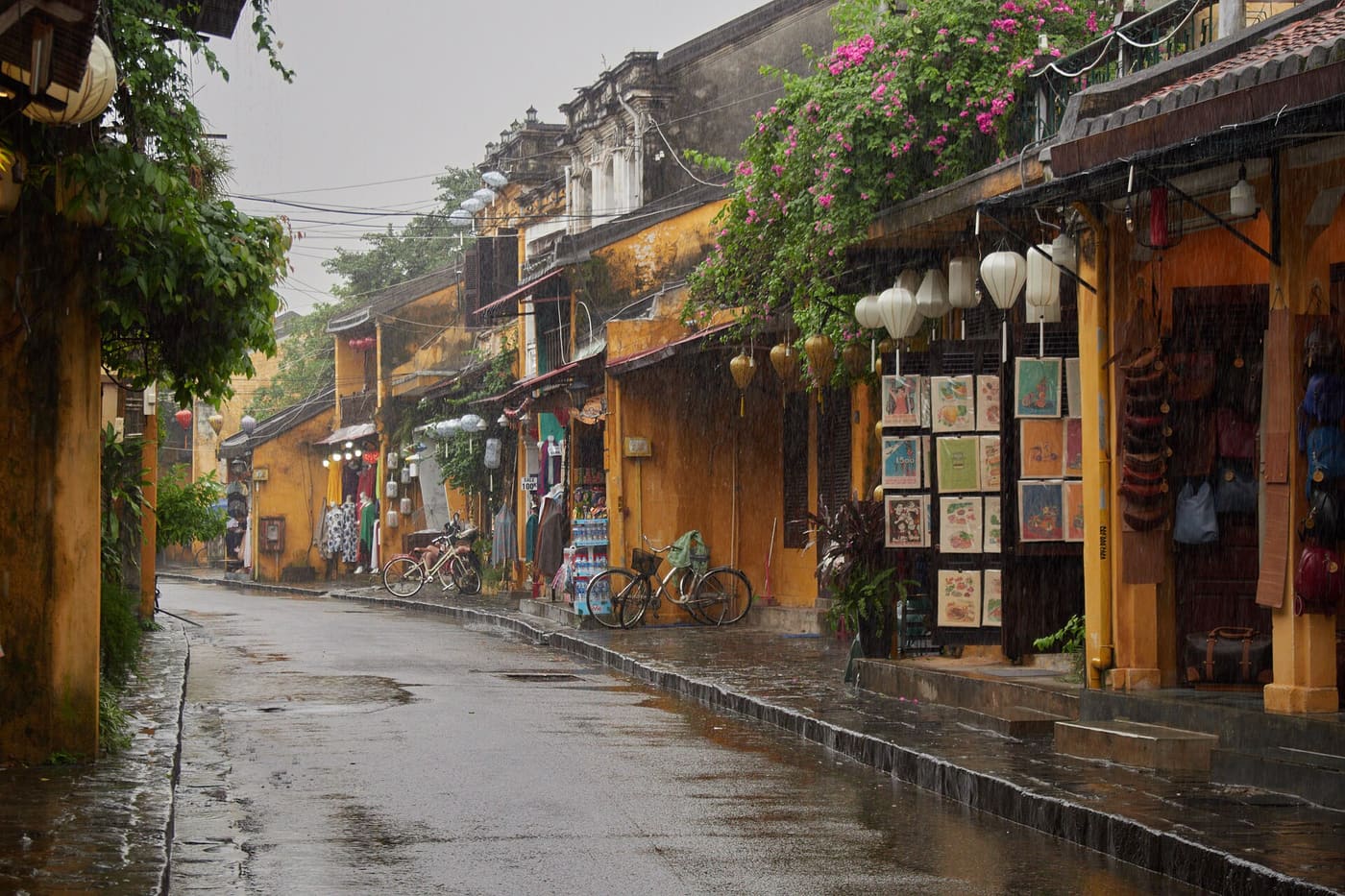
Three heritage sites in orbit around Da Nang: Hoi An 30 km away, My Son 70 km, Hue 100 km over or under the Hai Van Pass. Each deserves half a day to a full day.
What to eat
Da Nang is a breakfast city. Many of the best dishes are sold only between 6 and 10am.
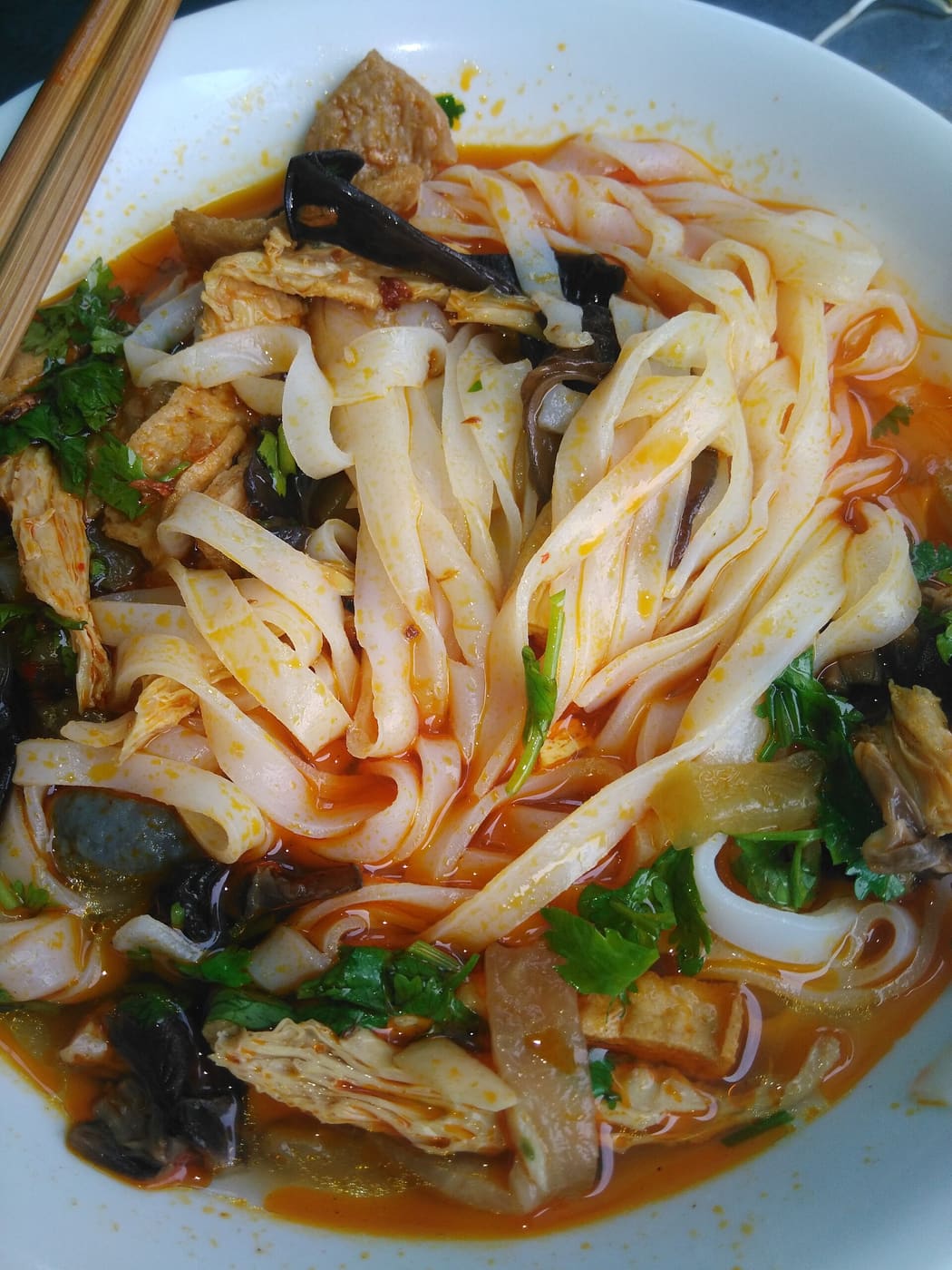
- Mì Quảng — the signature dish of the region: wide turmeric-yellow noodles in just a splash of rich broth, with toasted rice crackers and herbs.
- Bún chả cá — fish-cake noodle soup, a clean broth simmered from fish bones, eaten with pickled green chilli.
- Bánh tráng cuốn thịt heo — pork rolled in rice paper with herbs and dipped in fermented anchovy sauce; a dish to share over a long dinner.
- Bánh xèo and nem lụi — crisp savoury pancakes and grilled pork skewers with peanut dipping sauce.
- Seafood — along Vo Nguyen Giap and Hoang Sa. Always ask the price per kilo before ordering.
- Chè — sweet afternoon desserts; the durian version is a local favourite.
The full list with ordering tips is in What to eat in Da Nang.
What a three-day trip costs
Per person, travelling as a group of four, excluding shopping and international flights.
| Item | Budget | Mid-range | Comfortable |
|---|---|---|---|
| Domestic return flight | 1,400,000₫ | 2,200,000₫ | 3,500,000₫ |
| Hotel, 2 nights (shared room) | 500,000₫ | 1,200,000₫ | 3,000,000₫ |
| Food, 3 days | 600,000₫ | 1,000,000₫ | 1,800,000₫ |
| Entrance tickets | 250,000₫ | 1,000,000₫ | 1,300,000₫ |
| Local transport | 350,000₫ | 600,000₫ | 1,000,000₫ |
| Total per person | ≈ 3.1m ₫ | ≈ 6.0m ₫ | ≈ 10.6m ₫ |
The single biggest variable is the Ba Na Hills ticket (around 900,000₫ for an adult). Prices shift with the season — treat these as budgeting figures, not quotes.
Suggested itineraries
Three days, first visit
- Day 1: check in → late-afternoon swim at My Khe → seafood dinner → walk the Dragon and Love bridges.
- Day 2: a full day at Ba Na Hills and the Golden Bridge.
- Day 3: Marble Mountains in the morning → Hoi An in the afternoon and evening → airport.
Four days
Add a morning on Son Tra and an afternoon on the Hai Van Pass, or a full day trip to Hue. See the three-day itinerary and the four-day version.
Things travellers get wrong
- Book Ba Na tickets in advance. On a busy weekend the ticket queue can take 40 minutes.
- Bring a light jacket. The summit is 8–10°C cooler than the city.
- Walking shoes, not sandals. Both the Marble Mountains and Son Tra involve stone steps.
- Swim before 9am or after 4pm. The midday sun is punishing.
- Ask the per-kilo price for seafood before you order.
- Respect the beach flags. A red flag means stay out of the water, however calm it looks.
- Carry cash. Many of the best breakfast stalls take neither cards nor QR payments.
- Cover shoulders and knees in pagodas.
Frequently asked questions
How many days do I need in Da Nang?
Three days covers the highlights. Four is the comfortable number — you gain a day for Hue or Son Tra without rushing.
Is the rainy season worth it?
Yes, if you value low prices and quiet over beach time. Rain usually comes in bursts, and the Cham Museum, the pagodas and the Marble Mountains caves all work in wet weather.
Should I hire a private car?
From three people up, or when travelling with children or older relatives, almost always. Per head it costs about the same as a return taxi, but you never wait and you can change plans mid-route.
Can I combine Hoi An and Hue in one trip?
Yes. Hoi An is 45 minutes away and fits into an afternoon. Hue needs a full day because the drive alone is about four hours return.
Is Ba Na Hills suitable for children?
Very. The cable car is enclosed and safe, and the indoor Fantasy Park is built for them. Bring warm layers and expect a lot of walking.
Can I pay by card?
Hotels, larger restaurants and supermarkets take cards. Breakfast stalls, markets and some parking attendants are cash only.
Is My Khe Beach safe for swimming?
Yes during lifeguard hours (roughly 5am to 6pm) and when the flag is green. Never swim on a red flag.
How long is the airport transfer?
Fifteen to twenty minutes to the beach hotels. Taxis and Grab run 120,000–200,000₫; a pre-booked transfer has a fixed price, which helps on late-night arrivals.
What must I book ahead?
Flights and hotels first. Ba Na tickets and the airport transfer a few days out. Restaurants almost never need booking outside public holidays.
Is Da Nang good for solo travellers?
It is one of the easiest cities in Vietnam to travel alone — safe, walkable and relaxed.
Travelling with Da Nang Rider
We are a local private-car service: airport transfers, fixed-route trips to Hoi An, Ba Na, My Son and Hue, and full-day hire for your own itinerary. Prices are quoted up front, with no surprises.
| Route | 4-seat car | 7-seat car |
|---|---|---|
| Da Nang airport transfer | 180,000₫ | 220,000₫ |
| Da Nang → Hoi An | 250,000₫ | 300,000₫ |
| Da Nang → Ba Na Hills | 280,000₫ | 300,000₫ |
| Da Nang → My Son | 430,000₫ | 450,000₫ |
| Da Nang → Hue | 900,000₫ | 1,000,000₫ |
See the full price list, or message us on Zalo, WhatsApp or Facebook — even if you only want to ask about next week's weather. You will be talking to a driver in Da Nang, not a call centre.