The honest answer: yes if you are coming for the old town, the temples, the food and a lower bill. No if your main plan is swimming and photographing the Golden Bridge.
Da Nang's wet season has a worse reputation than it deserves. It is not five months of continuous rain. It is the season when rain arrives in bursts, room rates fall by half, and the sights are empty enough that you can stand in the middle of Hoi An with nobody else in the frame.
This article sets out the gains and losses, how to build an itinerary that rain cannot ruin, and when you genuinely should change your plans.
When is the wet season?
September to January, at its heaviest in October and November. That period is also central Vietnam's typhoon season.
| Month | Rainfall | Notes |
|---|---|---|
| September | Beginning | Still many sunny days, prices already down — the best month of the wet season |
| October | Heaviest | Heavy rain and the highest typhoon risk |
| November | Still high | Late storms possible; easing towards month end |
| December | Falling | Cool, scattered showers, good for sightseeing |
| January | Light | Effectively the end of the season; cool and pleasant |
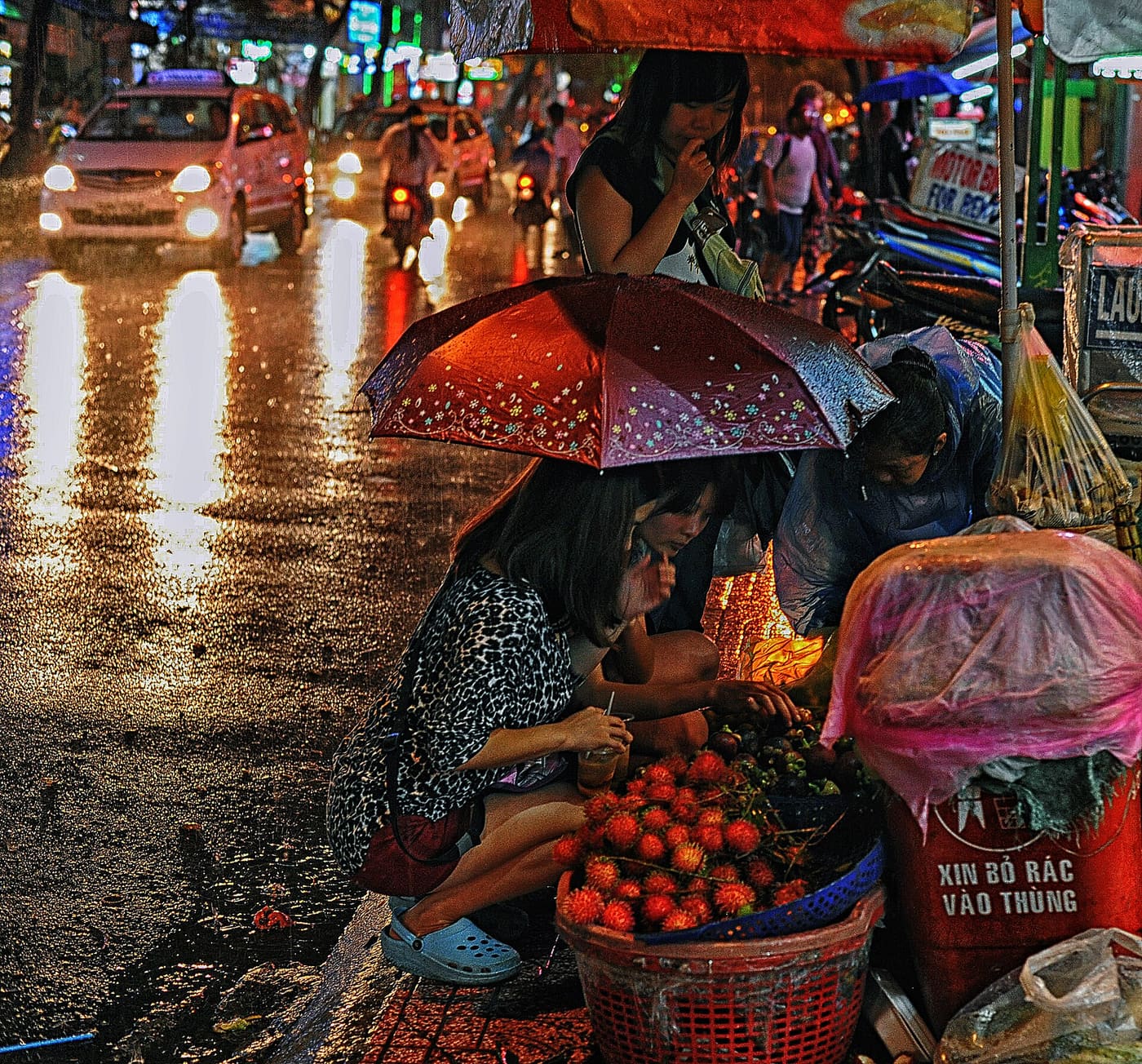
A point northern Vietnamese visitors often get wrong: there is no drizzle here. Rain comes as a heavy shower and then stops, so a "wet" day usually still has four to six usable hours.
What you gain
Much lower prices
This is the main reason. The same beachfront hotel in October can cost half its July rate, and flights are cheaper too.
| Item | Summer peak | Wet season |
|---|---|---|
| 3–4 star beachfront hotel | 1,200,000 – 2,500,000₫/night | 600,000 – 1,200,000₫/night |
| Domestic return flight | 2,500,000 – 4,000,000₫ | 1,200,000 – 2,200,000₫ |
| Resorts | Top rates | Deep discounts, often with meals included |
Space to yourself
The Golden Bridge midweek in October is a different place from the Golden Bridge in July. Hoi An still glows at night, but you walk through it rather than shuffle.
Cooler air
23–28°C instead of 35–37°C. Walking Hoi An or climbing the Marble Mountains is far more pleasant.
A different kind of beauty
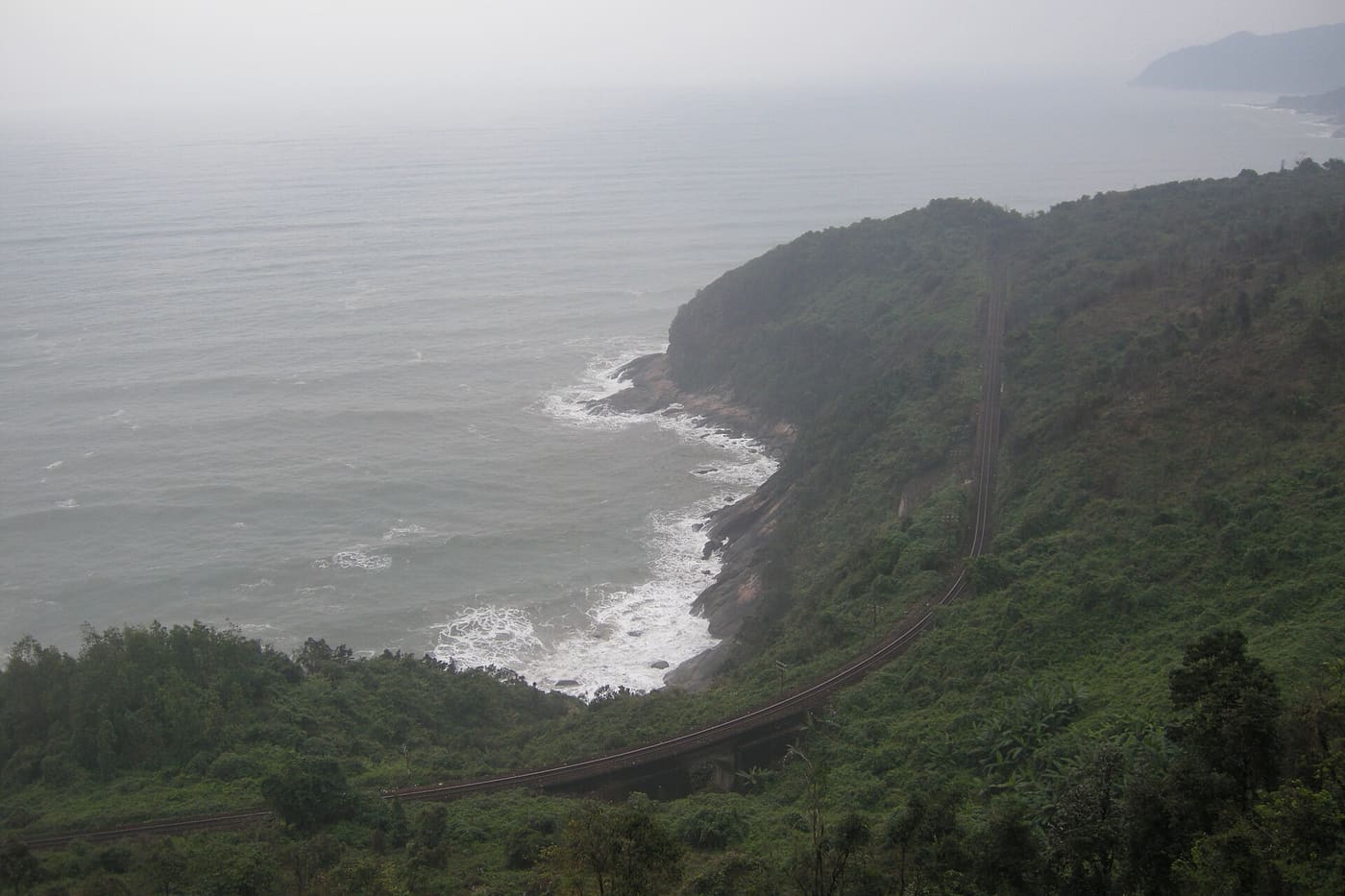
Hoi An after rain, with lantern light reflected in wet streets, is a scene many photographers prefer to a clear day. Son Tra and Ba Na get cloud drifting around their slopes.
Better service
Fewer guests means no waiting for tables, easy room upgrades, and drivers with time to stop while you take a photograph.
What you lose
- Swimming. The sea is rough, red flags are frequent, and debris washes ashore after heavy rain.
- Views at Ba Na. Some days you arrive at the summit and see only white.
- Certainty. October and November storms can affect flights and plans.
- Some activities stop. Boats to the Cham Islands do not run in rough seas.
- Local flooding. After very heavy rain, some streets and parts of Hoi An can flood for a day.
Who should come, and who should not
| Come if | Do not if |
|---|---|
| Budget matters most | Swimming is the point of the trip |
| You dislike crowds | You only have two days and no spare time |
| You come for culture, food and Hoi An | It is a honeymoon and you want guaranteed sunshine |
| Your dates can move | You are travelling with a very young child who hates being wet |
| You like atmospheric, moody photographs | You must see the Golden Bridge clearly |
Building an itinerary rain cannot ruin
1. Do not fix the order of your days
Decide tomorrow's plan tonight, after checking the forecast. Clear day: Ba Na or the beach. Wet day: museums, Hoi An, the Marble Mountains.
2. Put Ba Na in the middle of the trip
Never on the last day. If the summit is fogged in, you need another day to swap to.
3. Keep an indoor list ready
- Museum of Cham Sculpture — the largest collection of Cham art in the world
- The Marble Mountains caves — sheltered by the rock itself
- Fantasy Park at Ba Na — entirely indoors
- Da Nang Museum and the Fine Arts Museum
- Hoi An: old houses, assembly halls and craft workshops all have roofs
- Riverside cafés, a spa, Con Market
4. Do outdoor things in the morning
Wet-season rain here tends to be heavier in the afternoon and evening. Mornings are the safer bet.
5. Buy changeable tickets
A few hundred thousand đồng for flexibility is far cheaper than losing the trip to a storm.
When you really should change plans
Ordinary rain is not a reason to cancel. Watch closely, and consider moving your dates, if:
- A typhoon or tropical depression is forecast to affect central Vietnam in the next three to five days.
- Very heavy rain warnings run over consecutive days.
- Your airline warns of possible cancellations.
- Flood warnings are issued for Quang Nam — Hoi An sits low and can flood.
Watch the Vietnamese national hydro-meteorological forecasts and your airline's notices.
What to pack
- A thin folding raincoat — more practical than an umbrella on a bike or in wind.
- A compact umbrella for walking the old town.
- Quick-drying shoes with grip. The Marble Mountains steps get very slippery.
- A waterproof pouch for phone and camera.
- A spare set of clothes in your day bag.
- A light jacket — it turns noticeably cooler after rain.
- A power bank.
A three-day plan with two versions of each day
| Day | If it is dry | If it rains |
|---|---|---|
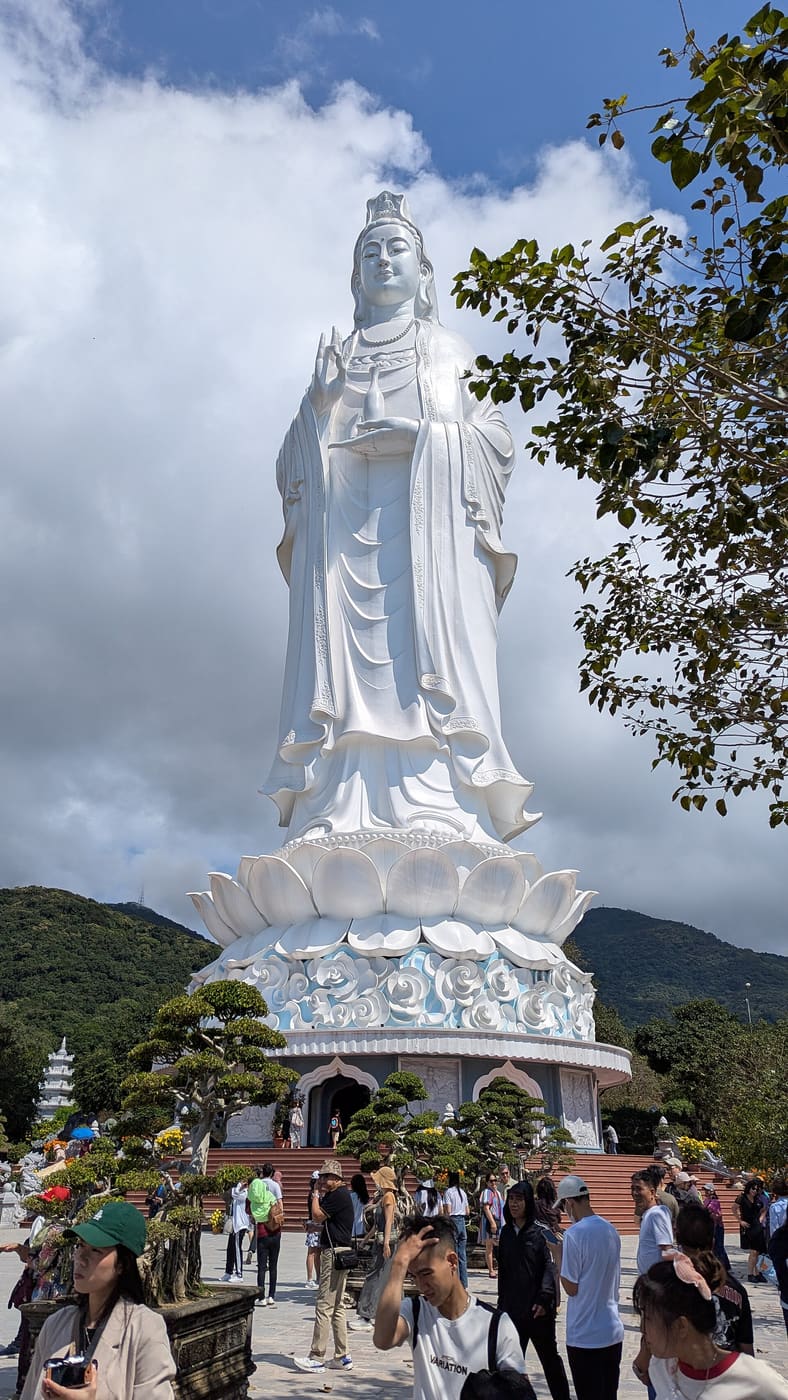
| Day 1 | Son Tra, Linh Ung Pagoda, an afternoon swim | Cham Museum, Con Market, riverside coffee |
| Day 2 | Ba Na Hills, all day | Switch to Hoi An; keep Ba Na for day 3 |
| Day 3 | Marble Mountains and Hoi An | Marble Mountains caves, then eat your way around town |
The principle: have one outdoor and one indoor option for every day, then choose on the morning.
Frequently asked questions
Does it rain all day?
Rarely. Showers typically last an hour or two. All-day rain generally means a storm system is passing.
Which months are wettest?
October and November.
Can I swim?
Usually not. The sea is rough and red flags are common — and a red flag means stay out, even during a dry spell.
Is Ba Na worth it in the rain?
It is possible, but fog is a real risk and the cable car may pause in strong wind. Keep the date flexible.
Is Hoi An still nice?
Very, and far quieter. Just note that the old town can flood after very heavy rain.
How much cheaper is it?
Hotels and flights are typically 30–50% below summer peak.
What if a typhoon comes?
Follow your hotel's and the local authorities' guidance, stay away from the sea, and contact your airline early. Storms are usually forecast several days ahead.
Should I buy travel insurance?
For October and November, yes. It costs little against the risk of cancellation.
How should I get around in the rain?
A car is the sensible choice. Riding a scooter in Da Nang rain is not dangerous so much as thoroughly unpleasant, and the Son Tra and Hai Van roads are best avoided.
Is there food that suits the weather?
Hot fish-cake noodle soup, mì Quảng, freshly griddled bánh xèo and evening snails — the wet season is a very good season to eat here.
Do I need to book far ahead?
Not as far as in summer, but one or two weeks still gets you a better room at a better rate.
Is it manageable with children?
Yes, with an indoor-leaning plan and no forced marches. Fantasy Park can absorb an entire wet day.
In short
Da Nang in the wet season is worth it under three conditions: a flexible schedule, realistic expectations, and a ready list of indoor alternatives. In return you get a quiet city, prices cut in half, and scenes that summer visitors never see.
Da Nang Rider drives all year, including through the wet months — and we are usually the ones telling guests which order to run their days in, based on that morning's forecast. See the price list · Message us.
Read next: Best time to visit Da Nang · Da Nang travel guide · The Marble Mountains